Email security is a broad term used to define techniques, tools, and solutions used to protect email accounts and domains against cyber attacks, intrusions, unauthorized access, and data loss. Email
Ransomware is one of the most sophisticated digital threats. Ransomware is a type of malware that has the ability to encrypt and hijack data and systems, requiring a ransom payment
Adware is a type of malware (or malicious software) that is hidden on your computer, tablet, or smartphone, and works by opening unwanted pages and advertisements. Depending on the case,
What are DMARC, DKIM and SPF? Why should your company adopt them?
DMARC, DKIM and SPF are email authentication and validation protocols. These are technologies that strengthen your company’s email security and also improve your email deliverability. All of them must be
What is NLP and how we use it to detect malicious emails
Natural language processing (NLP) is a field of artificial intelligence and machine learning that deals with the ability of a computer or machine to understand and analyze human language. Depending
DMARC is an email authentication and validation protocol. It protects the business’s reputation and brand by allowing the company to have control and visibility over who uses its domain to
Simple Mail Transfer Protocol (SMTP) is the technology that allows emails to be sent from one server to another until they are delivered to your mailbox. In other words, SMTP
What is NY SHIELD, the New York data security act?
The Stop Hacks and Improve Electronic Data Security Act (NY SHIELD) is a data privacy and security law of the U.S. state of New York. In practice, it requires more
What is CCPA, the California Consumer Privacy Act?
As the name itself suggests, the California Consumer Privacy Act (CCPA) is a data protection law of the U.S. state of California. It gathers rules that must be followed by
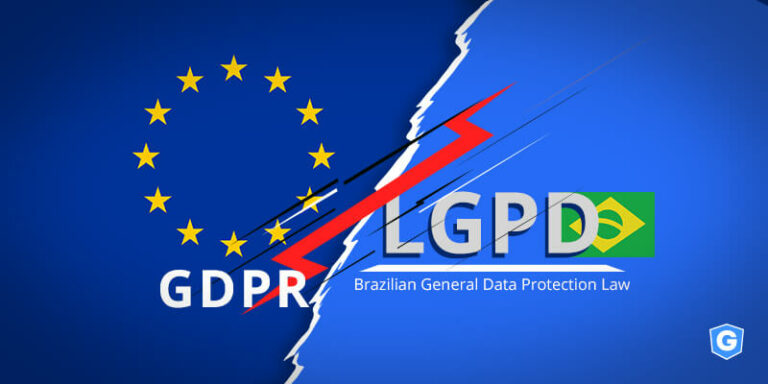
Main points of comparison between Brazilian LGPD and European GDPR
LGPD (Brazilian General Data Protection Law) and GDPR (European General Data Protection Regulation) are laws with very similar goals. They aim at bigger control and transparency regarding the use of
This website stores cookies on your computer. These cookies are used to collect information about how you interact with our website and allow us to remember you. We use this information in order to improve and customize your browsing experience and for analytics and metrics about our visitors both on this website and other media. To find out more about the cookies we use, see our Privacy Policy. If you decline, your information won’t be tracked when you visit this website. A single cookie will be used in your browser to remember your preference not to be tracked.